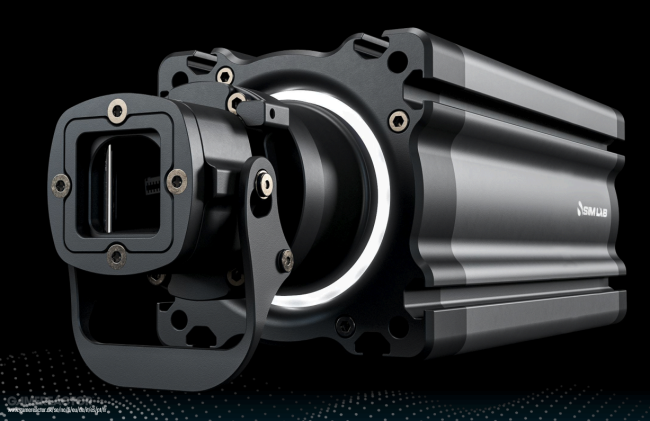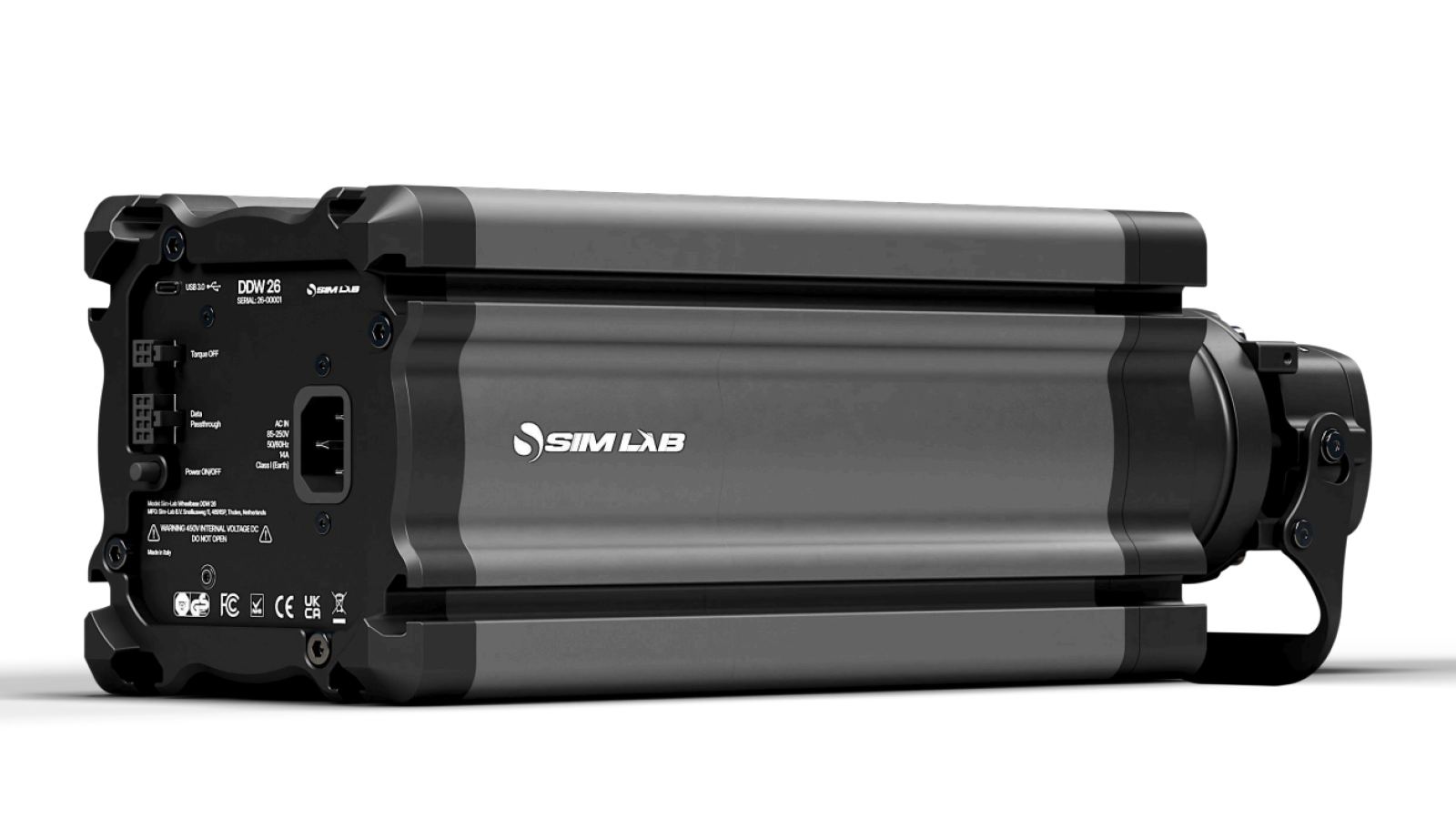
Under flertalet år har holländska Simlab gjort sig kända som tillverkasre av de kanske mest heltäcvkande och kvalitativt prisvärda aluriggarna på simracinghimlen men på senaste tid har de valt att bredda sin verksamhet och börjat tillverka växelspakar, handbromsar, pedaler och numer även direct drive-rattbaser. Deras första bas heter DDX och den släpps i mars nästa år. Enligt Simlöab själva har de byggt en servomotor med högre känslighet och mer detaljer än samtliga konkurrenter och med hela (hiskeliga) 39 Nm vridmoment i toppmodellen (!) kan vi såklart enkelt förvänta oss monstermängder med kraft för den med riktigt starka armar/axlar. Priserna då? 26 Nm-modellen kommer att gå lös €1499 medan 39:an kostar €1999. Dyra grejor, minst sagt.
TorqueSync patented technology
Translates game force commands into motor torque with extremely low latency and high precision. Preserves micro-detail in FFB effects, improves stability during transient events, and enhances on-edge car control.
Optimised servo motor design
Our servo motors are industrial-grade, hand-built units with harmonised magnet pairs and distributed-wounded stator cores. This architecture virtually eliminates torque ripple and delivers the natural, smooth feel of our DDX TorqueSync bases
Internal 350V operating voltage
Running the servo on its native 350 V bus increases voltage headroom and current slew rate. The motor responds faster to inputs, force feedback feels more alive and intense, and control at and over the limit improves.
Advanced slew rate
Compared with typical 48 V architectures, the 350 V bus delivers a higher current slew rate at the motor phases. That faster rise and fall of current reduces lag in torque production, preserves detail in sharp transients, and keeps forces stable under heavy, fast-changing loads. In practice, you feel crisper turn-in, more precise micro-detail over surface changes, and cleaner recoveries when the rear steps out.
USB data-passthrough
Our data-passthrough solution is extensive and future proof, as well as backwards compatible with all USB steering wheels. The wheelhub features a USB connector which is directly outputted through the USB 3.0 connector on the back of the device. In addition to USB passthrough, there are five separate lines inside the quick release. One provides a dedicated 5V at 2A power rail for higher-draw wheels and hubs. The remaining four are user-assignable I/O lines that can be used for integrations such as CAN bus or EtherCAN passthrough.